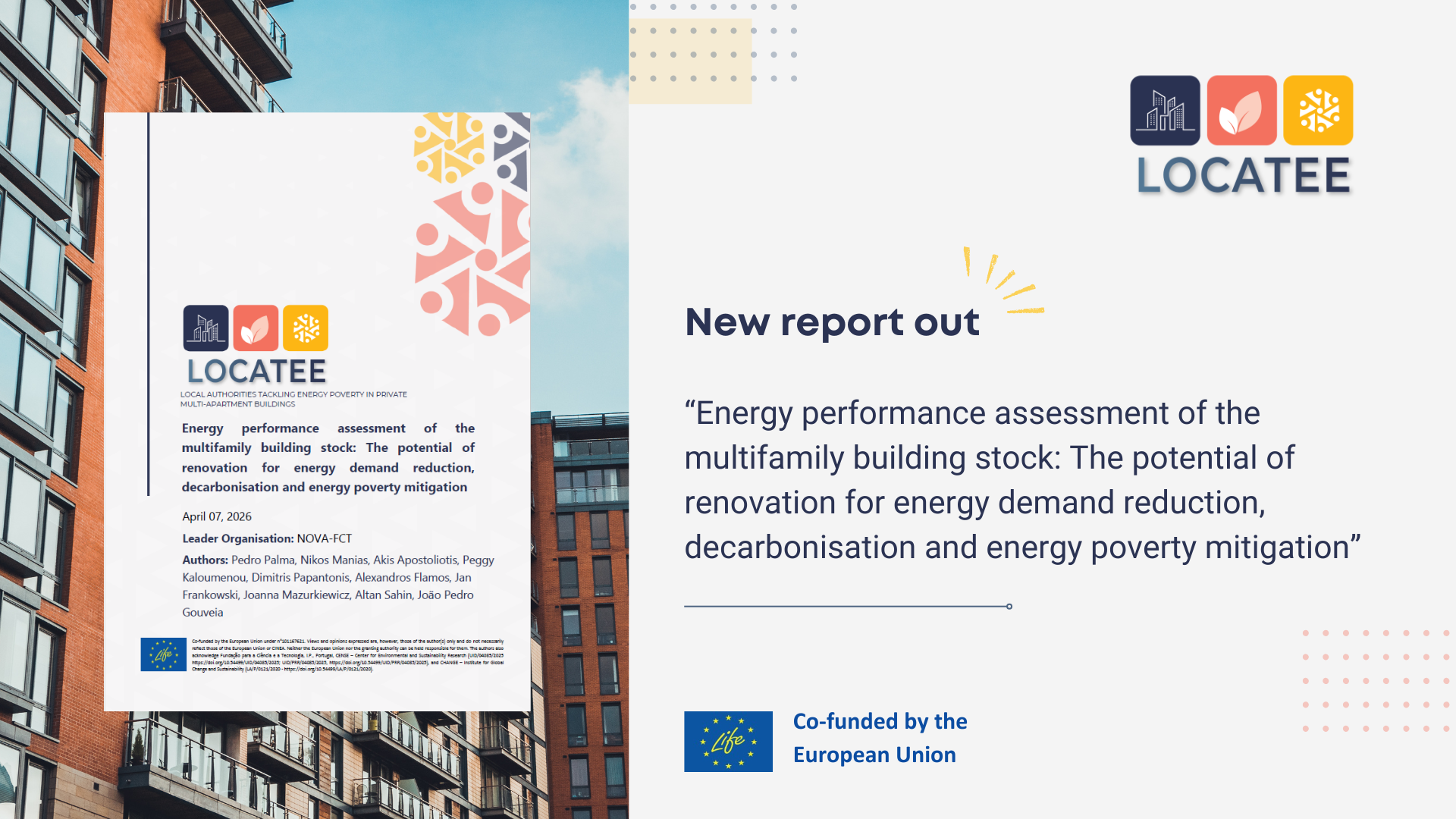
The latest report developed within the LIFE Programme funded project, LOCATEE, has been published and is now available. This report examines the potential of building energy renovation and renewable energy integration to support decarbonisation and alleviate energy poverty in private multifamily buildings, covering three pilot municipalities: Rumia (Poland), Torres Vedras (Portugal), and Piraeus (Greece).
Using the DREEM model, this study assesses the impact of thermal insulation, heating system upgrades, and photovoltaic installations on energy demand, carbon emissions, and energy bills, through energy simulations for representative dwelling typologies in the studied municipalities.
Heat pumps emerged as the most impactful and cost-effective solution, particularly in Torres Vedras and Piraeus, with potential energy bill reductions exceeding 50%. Thermal insulation showed comparatively lower cost-effectiveness but remained beneficial for older and lower energy-performing buildings. Biomass and gas boiler upgrades delivered meaningful savings in less efficient dwellings, while photovoltaic systems demonstrated favourable cost-effectiveness despite technical constraints.
The findings could help identify the most suitable measures for vulnerable households and provide evidence to support municipalities in designing targeted energy poverty mitigation policies and more effective local climate strategies (SECAPs).
Building on this work, the upcoming LOCATEE toolkit will integrate energy poverty detection with solution assessment, enabling the identification of the most cost-effective interventions at the household, building, and district levels.
You can read the full report here: https://zenodo.org/records/19475389
Follow LIFE-LOCATEE on LinkedIn to stay updated on new insights, developments and results!