
-
Test
From vision to action: LOCATEE kick-off highlights!
The new LOCATEE project, funded by the European Commission’s LIFE Programme, has officially kicked-off! With an ambitious and dedicated team, we’re set to bring innovative solutions to local municipalities in tackling energy poverty! LOCATEE aims to support local municipalities in tackling energy poverty by facilitating the renovation of private multi-apartment buildings for vulnerable residents. The project will provide a comprehensive toolkit to identify energy vulnerable households, match tailored interventions to their needs, and incorporate energy poverty alleviation activities into the long-term strategic frameworks of municipalities, such as Sustainable Energy & Climate Action Plans (SECAPs). LOCATEE’s approach will be implemented in…

-
Test
ENPOR Newsletter: 5th edition is here!
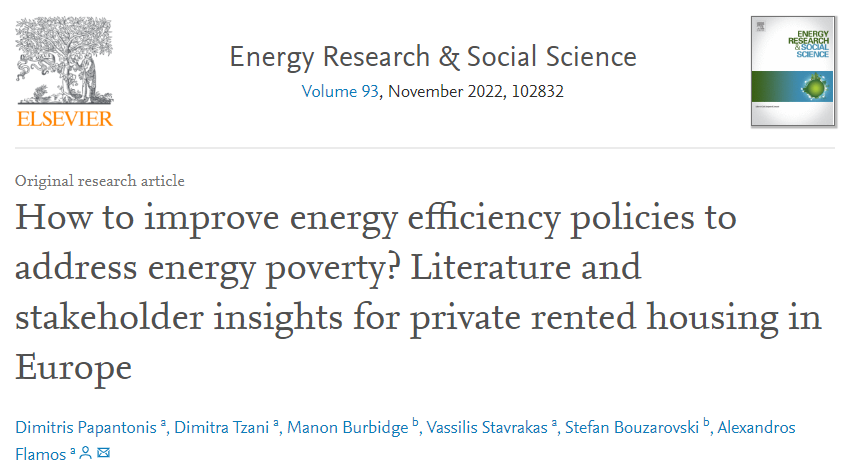
The Horizon 2020 ENPOR project published its 5th Newsletter, focusing on the project’s latest news and events.. This issue presents our scientific publication entitled “How to improve energy efficiency policies to address energy poverty? Literature and stakeholder insights for private rented housing in Europe” published at Elsevier’s Energy Research & Social Science journal and written by Dimitris Papantonis, Dimitra Tzani, Manon Burbidge, Dr. Vassilis Stavrakas, Stefan Bouzarovski, and Professor Dr. Alexandros Flamos, within the context of the project. The paper identifies structural factors that serve as barriers to, and solutions for, the implementation of energy efficiency policies in the private…
-
Test
ENPOR paper: How to improve energy efficiency policies to address energy poverty?
Our new paper entitled “How to improve energy efficiency policies to address energy poverty? Literature and stakeholder insights for private rented housing in Europe” is now published at Elsevier’s Energy Research & Social Science journal! The article is produced by Dimitris Papantonis, Dimitra Tzani, Manon Burbidge, Dr. Vassilis Stavrakas, Stefan Bouzarovski, and Professor Dr. Alexandros Flamos, within the context of the Horizon 2020 funded ENPOR project. Households in the private rented sector, and especially those of lower income, face far more energy poverty issues than the general population, meaning that they are often unable to afford socially and materially required…
-
Test
TEESlab at the 3rd International Conference on Energy Research and Social Science (ERSS)
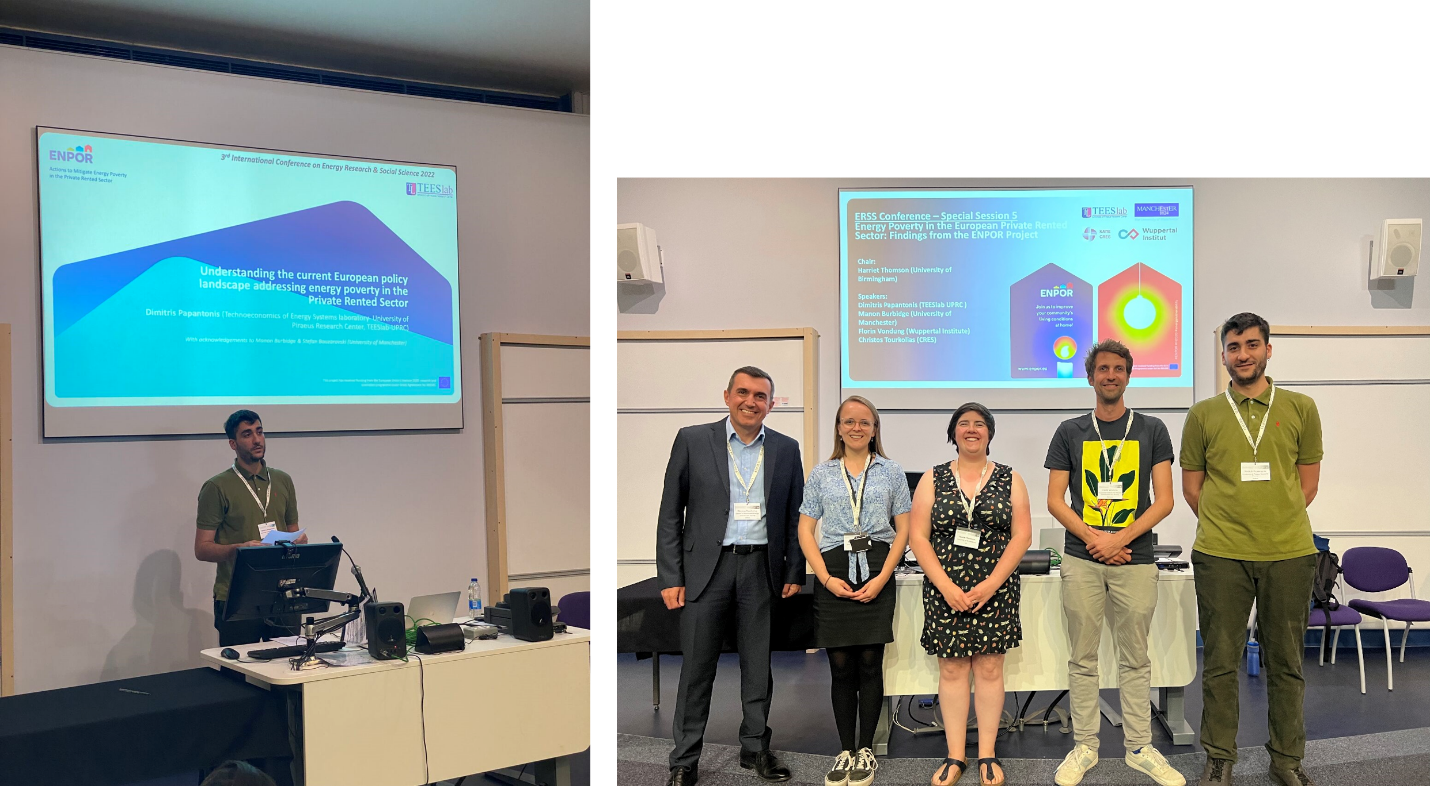
Mr. Dimitris Papantonis Research Associate in the Technoeconomics of Energy Systems laboratory (TEESlab), has participated in the 3rd International Conference on Energy Research and Social Science (ERSS), organised by Elsevier, presenting key findings from the ENPOR project with the special session: “Energy poverty in the European private rented sector: Findings from the ENPOR project”. ENPOR aims at identifying energy-poor tenants and respective landlords as well as understanding and addressing their needs. This will be accomplished through the adaptation and implementation of ten policies in seven EU Member States. The presentations were based on the following ENPOR’s Deliverables: Deliverable 2.1b: Analysis…
-
Test
Setting the scene for tackling energy injustice in the European Private Rented Sector
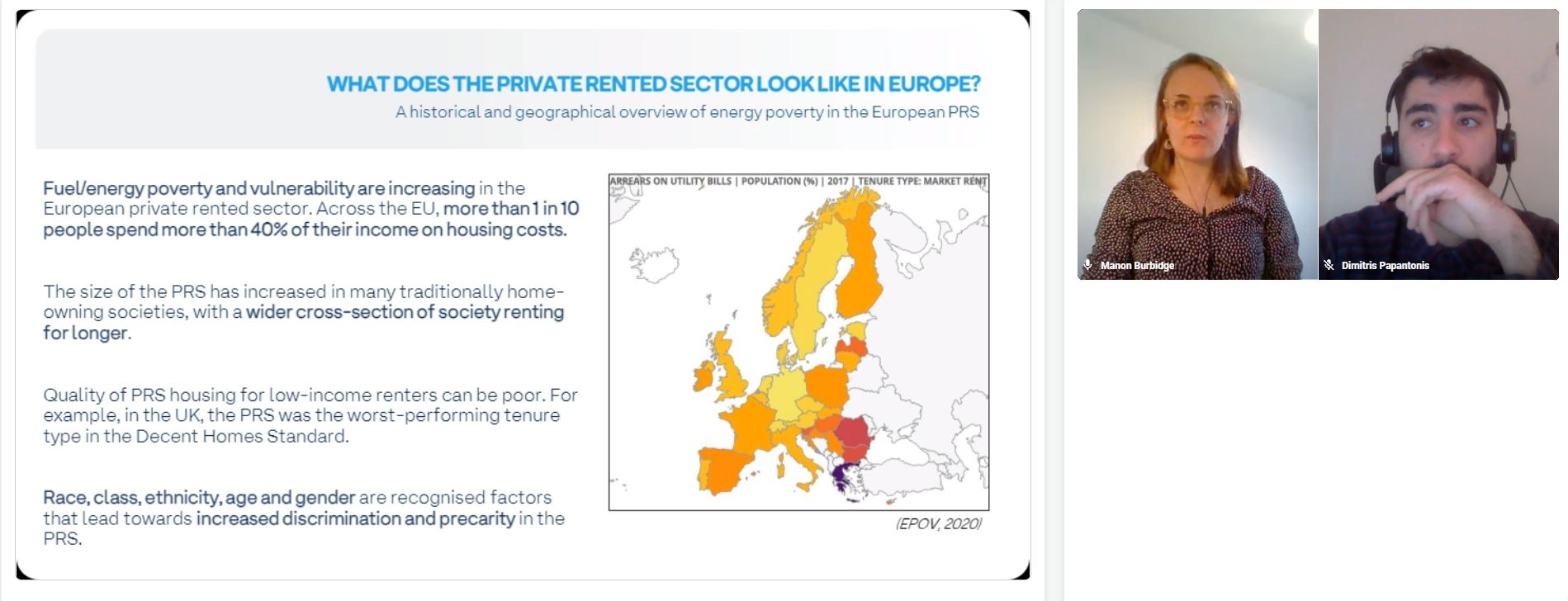
Mr. Dimitris Papantonis, Research Associate in the Technoeconomics of Energy Systems laboratory (TEESlab), has participated in the “Social Innovation in the Energy Transition” (SIET) Conference organised by the Technical University of Delft, co-presenting key findings in the panel “Energy Justice and Energy Democracy”, with the contribution “Setting the Scene for Tackling Energy Injustice in the European Private Rented Sector-Findings from the ENPOR project”. ENPOR aims at identifying energy-poor tenants and respective landlords as well as understanding and addressing their needs. This will be accomplished through the adaptation and implementation of ten policies in seven EU Member States. You can find…
-
Test
Energy Poverty in the Private Rented Sector – Barriers and Solutions
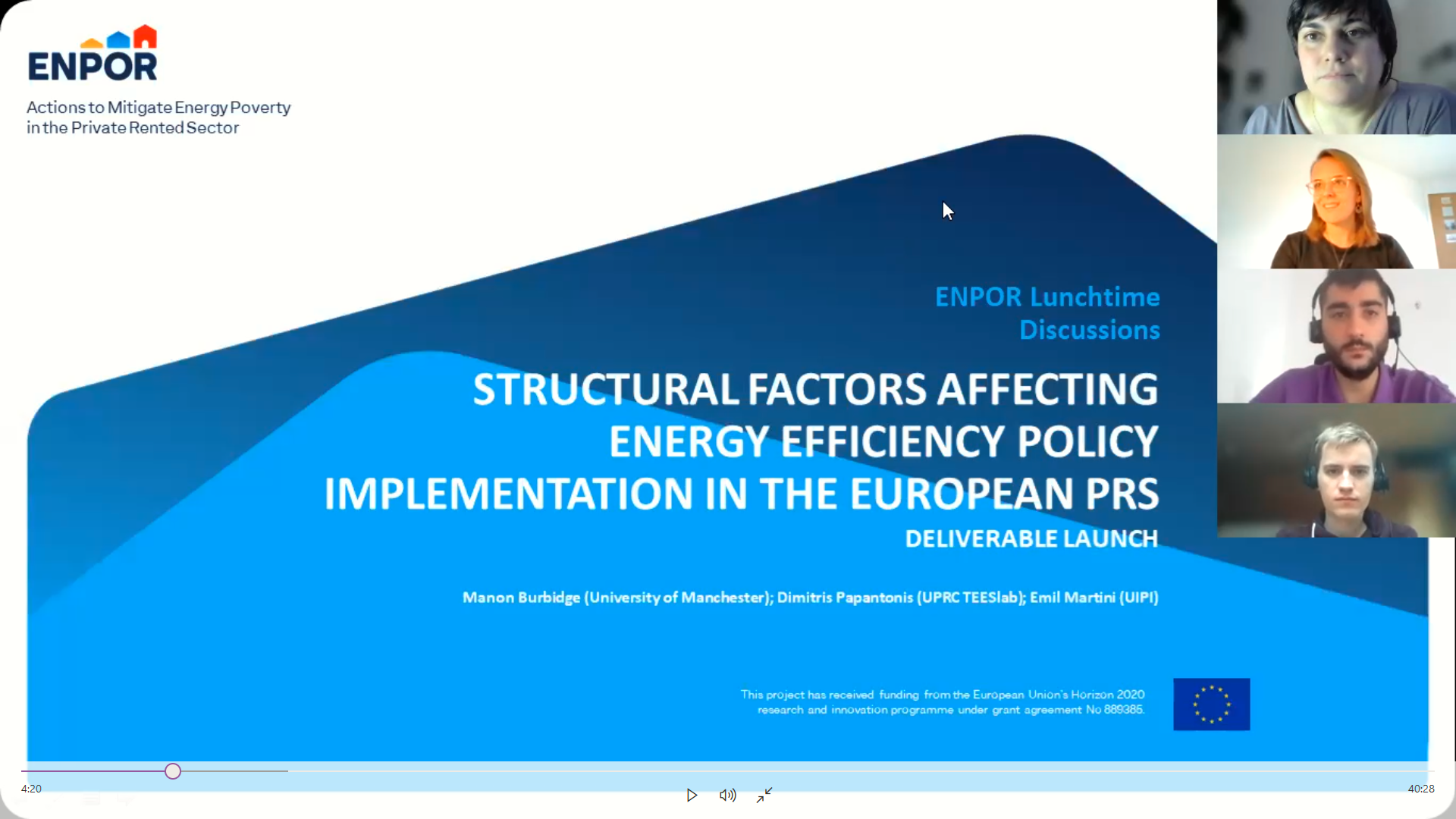
Mr. Dimitris Papantonis, Research Associate in the Technoeconomics of Energy Systems laboratory (TEESlab), has participated in the Lunch Talk: “Energy Poverty in the PRS – Barriers and Solutions”, organised in the context of the EC-funded Horizon 2020 (H2020) project ENPOR, to present key findings from our Deliverable 2.1c “Structural Factors Impacting Energy Efficiency Policy Implementation in the European Private Rented Sector”. ENPOR aims at identifying energy-poor tenants and respective landlords as well as understanding and addressing their needs. This will be accomplished through the adaptation and implementation of ten policies in seven EU Member States. You can find the full…
-
Test
Structural factors impacting energy efficiency in the Private Rented Sector
Alleviating the impact of energy poverty in the Private Rented Sector (PRS) is challenging. One of the main reasons for this is the difficulty to deliver energy efficiency measures to PRS households due to structural problems like information deficits, split incentives, and more. Our new ENPOR Report examines the structural barriers preventing investment in energy efficiency measures in Europe’s PRS housing stock. The analysis is undertaken concerning the broader trends in private renting, the regulatory landscape that currently exists, and the need to reduce social vulnerability and income poverty more generally. Following desk-based reviews of academic and grey literature, financial,…
-
Test
ENPOR Newsletter #2: Summer Edition is here!
The ENPOR Newsletter #2: Summer Edition has been released!. In this new version you can find information on: → How ENPOR engages stakeholders to support policy design and implementation. → New research results by the Report “What Prevents Energy Efficiency Policy Implementation in the European Private Rented Sector“? → ENPOR upcoming events and talks. → Guest articles (e.g., on the “Fit-for-55” package and energy poverty, women and energy poverty, etc.). → News from sister projects. You can find the newest ENPOR Newsletter here.
-
Test
ENPOR Newsletter #1: Spring Edition
The ENPOR Newsletter #1: Spring Edition has been released! Energy vulnerability (poverty) is a critical factor to consider within a fair energy transition. It must be addressed with adequate policies. The ENPOR Project increases the capacity of the decision-makers for understanding and mitigating its effects by designing and implementing ten policies. ENPOR will support the adaption and implementation of ten policies in 7 Member States tailored to the specific needs of the private rented sector and will integrate them into broader policy objectives. You can find the ENPOR Newsletter here.
-
Test
Welcome to ENPOR!
Around 50 million households in the European Union (EU) are estimated to be living in energy poverty – or energy vulnerability, unable to afford the energy needed to adequately heat or cool their homes. This is caused by a combination of factors including high energy costs, low household incomes, and energy inefficient buildings, and can have severe impacts on health and wellbeing. Energy poverty is recognised as a priority issue under the European Green Deal and the Clean Energy Package. To tackle the issue, the EU objectives are to collect better data on space cooling and summer overheating, the incorporation…