
-
Test
TEESlab at the 17th Integrated Assessment Modeling Consortium (IAMC) Annual Meeting – Day 3 Recap!
After two incredible days at the 17th Integrated Assessment Modeling Consortium (IAMC) Annual Meeting filled with insights in the field of Integrated Assessment Models (IAMs) and networking opportunities between different institutions, we are happy to dive into the presentation of our team at Day 3. If you are interested in learning more about our contributions from Day 1 visit here! During the 3rd day of the conference, our colleague Dr. Vassilis Stavrakas presented the study entitled “Decarbonisation Pathways of Energy Citizenship: How citizens can contribute to the energy system in different ways and their impacts”. This presentation summarised findings of…

-
Test
TEESlab at the 17th Integrated Assessment Modeling Consortium (IAMC) Annual Meeting – Day 1 Recap!
We are excited to announce that our team participated at the 17th Integrated Assessment Modeling Consortium (IAMC) Annual Meeting that took place during 4-6 of November in Seoul, South Korea. The event aimed to present and discuss the state of the art in the field of Integrated Assessment Models (IAMs), facilitate interaction with collaborating institutions and organisations, and evaluate and revisit the priorities of the IAMC’s community. The meeting was organised by the Korea Environment Insitute (KEI) and the Graduate School of International Studies at the Yonsei University, with the support of the Republic of Korea’s Ministry of Environment and…
-
Test
ENPOR Newsletter: 5th edition is here!
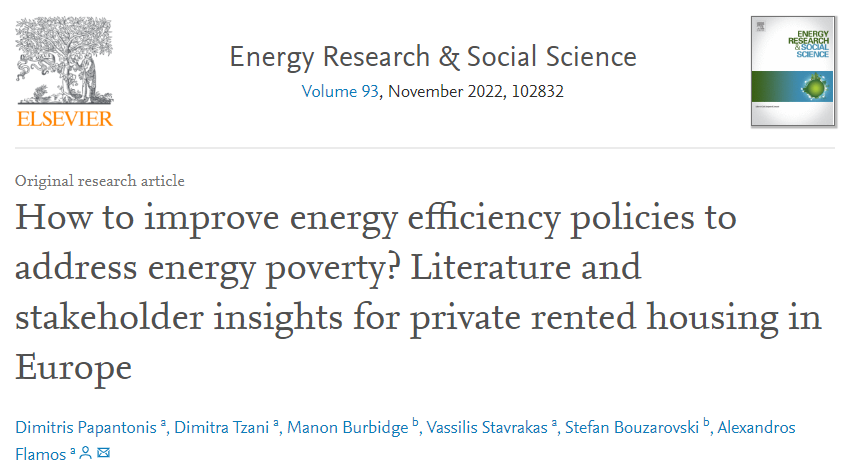
The Horizon 2020 ENPOR project published its 5th Newsletter, focusing on the project’s latest news and events.. This issue presents our scientific publication entitled “How to improve energy efficiency policies to address energy poverty? Literature and stakeholder insights for private rented housing in Europe” published at Elsevier’s Energy Research & Social Science journal and written by Dimitris Papantonis, Dimitra Tzani, Manon Burbidge, Dr. Vassilis Stavrakas, Stefan Bouzarovski, and Professor Dr. Alexandros Flamos, within the context of the project. The paper identifies structural factors that serve as barriers to, and solutions for, the implementation of energy efficiency policies in the private…
-
Test
The successful H2020 ENSMOV PROJECT is back as ENSMOV Plus!
The new ENSMOV Plus project, co-funded by the European Union’s Life Programme, has officially kicked off! ENSMOV Plus, building on the existing knowledge and success of the previous HORIZON 2020 ENSMOV project, will directly support 11 Member States (Italy, France, Greece, Austria, Poland, Germany, Romania, Hungary, Croatia, Slovenia, Lithuania) to improve policy implementation, and evaluation, measurement and verification (EM&V) schemes and deliver on the ambitions of the new Fit for 55 agenda. More specifically, the project aims to support public authorities and key stakeholders in the implementation of Article 7 of the Energy Efficiency Directive (EED), and will develop resources…
-
Test
ENPOR paper: How to improve energy efficiency policies to address energy poverty?
Our new paper entitled “How to improve energy efficiency policies to address energy poverty? Literature and stakeholder insights for private rented housing in Europe” is now published at Elsevier’s Energy Research & Social Science journal! The article is produced by Dimitris Papantonis, Dimitra Tzani, Manon Burbidge, Dr. Vassilis Stavrakas, Stefan Bouzarovski, and Professor Dr. Alexandros Flamos, within the context of the Horizon 2020 funded ENPOR project. Households in the private rented sector, and especially those of lower income, face far more energy poverty issues than the general population, meaning that they are often unable to afford socially and materially required…
-
Test
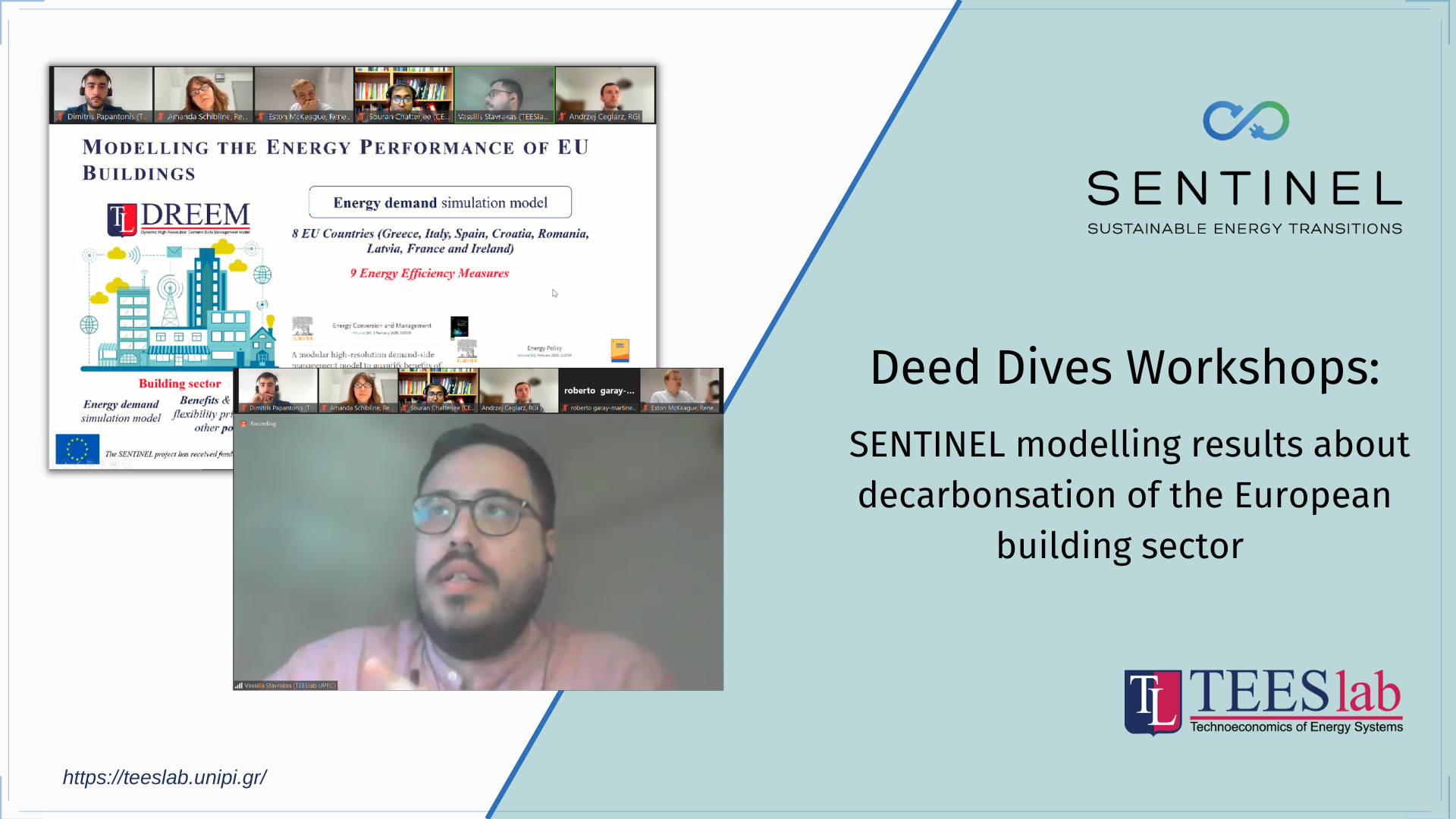
“Deep-dive” workshop on the decarbonisation of the European building sector
The Technoeconomics of Energy Systems laboratory – TEESlab participated in the “deep dive” workshop on the decarbonisation of the European building sector organised in the context of the Horizon 2020 SENTINEL project. The aim of the workshop was to receive detailed feedback on our SENTINEL modelling results from relevant stakeholders and colleagues in the field. During the workshop, Dr. Vassilis Stavrakas presented our recent study entitled “Energy transition in the European residential sector: Investigating the saving potential and cost-effectiveness of different energy efficiency measures”. In particular, the study focuses on estimating the energy saving potential and assessing the cost-effectiveness…
-
Test
Prof. Dr. Alexandros Flamos discusses key points on the issue of the energy crisis and the EU’s proposal for a cap on natural gas prices
Professor Dr. Alexandros Flamos, Director of the Technoeconomics Energy Systems laboratory (TEESlab), participated in a radio broadcast of the Greek radio station “SKAI 100.3FM”, where he discussed the issue of the energy crisis in Europe and the European Commission’s proposal for a cap on gas prices. Professor Flamos highlighted the important role that energy-efficiency measures and renovations can play in the energy transition, serving as a long-term strategy to reduce energy demand in the residential sector, and energy costs, especially burdening energy vulnerable households. He also added that, based on research studies conducted by TEESlab, the renovation rate in the…
-
Test
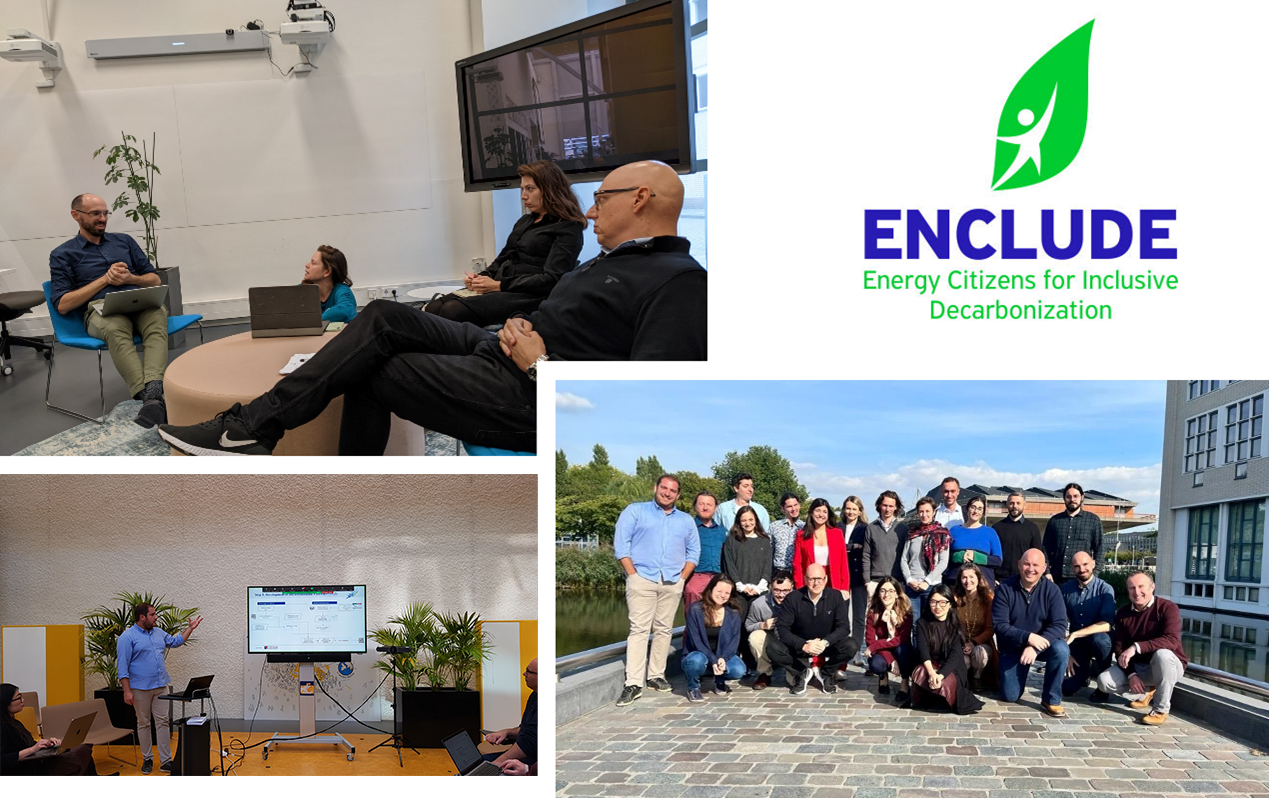
TEESlab at the 2nd General Assembly of the H2020 ENCLUDE project!
The 2nd General Assembly (GA) of the H2020 ENCLUDE project that took place on 22-23 September 2022 at the Delft University of Technology (TU Delft), was completed successfully! ENLCUDE partners had the opportunity to meet in person for the first time and to discuss their role and key contributions to the project’s objectives. Who is an “energy citizen”? The guiding question of the meeting was aimed at clarifying and strengthening the project’s overall vision of the energy citizen concept. During the meeting, the focus of the discussions was on better defining and conceptualizing the energy citizenship and its decarbonization potential.…
-
Test
Triple-A paper: Bridging the transparency gap in energy efficiency financing by co-designing an integrated assessment framework with involved actors
Α new scientific paper based on research conducted within the H2020 Triple-A project has been published in the Elsevier’s ”Energy Reports” journal. This study introduces the concept of IRR curve, as an appropriate tool for assessing the economic performance of energy efficiency investments from investors’ point of view. The findings provide evidence for the profitability potential of energy efficiency investments and implications about investment holding period. You can read the Press Release about the paper here.
-
Test
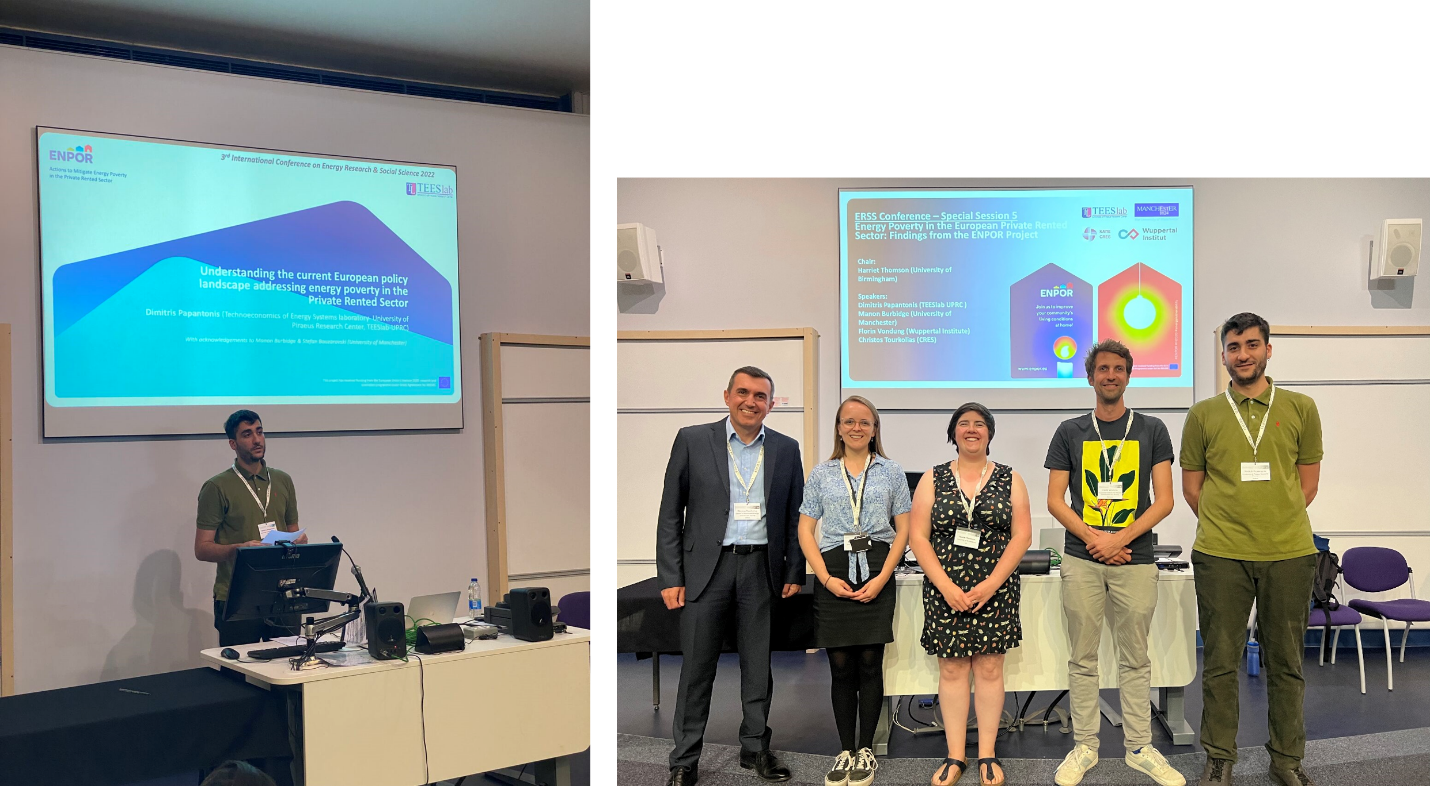
TEESlab at the 3rd International Conference on Energy Research and Social Science (ERSS)
Mr. Dimitris Papantonis Research Associate in the Technoeconomics of Energy Systems laboratory (TEESlab), has participated in the 3rd International Conference on Energy Research and Social Science (ERSS), organised by Elsevier, presenting key findings from the ENPOR project with the special session: “Energy poverty in the European private rented sector: Findings from the ENPOR project”. ENPOR aims at identifying energy-poor tenants and respective landlords as well as understanding and addressing their needs. This will be accomplished through the adaptation and implementation of ten policies in seven EU Member States. The presentations were based on the following ENPOR’s Deliverables: Deliverable 2.1b: Analysis…
-
Test
How do you imagine the Energy Efficiency Aggregator business model?
An Energy Efficiency Aggregator can have different functions and roles including attracting customers, aggregating a sufficient number of buildings together into an energy savings portfolio, monitoring and evaluating the criteria for joining and selecting the projects, looking for investors and defining an energy efficiency programme. The H2020 SENSEI project has launched a survey to help in developing the Energy Efficiency Aggregator business model and support the replicability of Pay-for-Performance schemes in the EU. The questionnaire aims to provide a better understanding of the following questions: What kind of services are expected from the Energy Efficiency Aggregator business model? What are…
-
Test
“Risks and mitigation strategies in energy efficiency financing: A systematic literature review”
Α new scientific paper based on research conducted within the H2020 Triple-A project has been published in the Elsevier’s “Energy Reports” journal. This study aims to explore: The risks that could affect energy efficiency investments. The project phases that these risks usually emerge. The strategies to mitigate these risks. You can read the Press Release about the paper here.